
What Are RWA Tokens in Crypto? A Beginner’s Guide
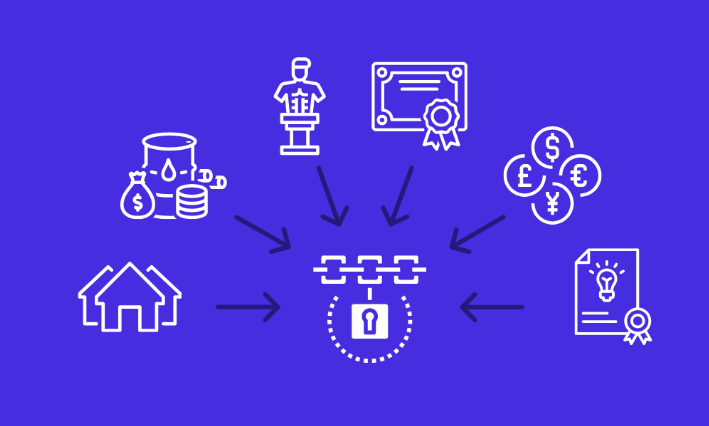
If you’ve spent time on a cryptocurrency trading platform, you’ve probably heard about RWA tokens. This isn’t like NFTs or meme coins – which were more buzzwords than real utility concepts – but Real-World Asset tokenization is actually reshaping crypto by connecting it to things people already understand: stocks, gold, government bonds. Real world assets.
In the first quarter of 2026, the tokenized RWA market was already worth over $19 billion, with tokenized treasuries contributing $9 billion to that alone.
In this post, I’ll discuss what RWA tokens are, how they work, and where cryptocurrency trading platforms like Delta Exchange India fit in.
Key Takeaways
- RWA tokens are blockchain representations of real assets.
- The tokenized RWA market had hit $19.3 billion in the first quarter in 2026; RWA perps volume reached $524.79 billion that same quarter.
- Real-world asset tokenization carries issuer, custody, redemption, and liquidity risks beginners must understand first.
- Platforms like Delta Exchange India offer INR support alongside RWA products.
- Cryptocurrency derivatives trading adds extra risk on top of RWA tokens and might not be the easiest starting point for beginners.
What are RWA Tokens?
An RWA token represents an asset that exists off-chain – a Treasury bond, gold, a share of Apple stock, or an ETF.
So the real asset stays put, but a matching digital token is created and tracked on the blockchain that’s designed to reflect the value of the real thing behind it. Yes, this may be sounding close to an NFT, but it’s distinct.
When you trade an RWA token on spot markets, you’re basically buying and selling the token itself, not the physical asset. Its price tracks the underlying asset. Of course, crypto market conditions can pull the price around too, so the token and the real asset don’t always match exactly. Though they mostly will.
Examples of RWA tokens include Tether Gold (XAUT), PAX Gold (PAXG), tokenized U.S. stocks, and other asset-backed products that bring traditional financial assets onto the blockchain.
Why RWA Tokens are Growing So Rapidly
Tokenized stocks have become one of the fastest-growing categories in crypto, and perpetual futures tied to these tokens have surged – RWA perps volume crossed $500 billion in Q1 2026 alone, versus $300ish billion for all of 2025 – all this from the CoinGecko RWA Report I shared earlier.
More products are showing up too: tokenized US equities, indices, and gold are becoming common across exchanges, pushing crypto derivatives trading into new territory as traders speculate on traditional assets using crypto-native tools.
This also means more nuance, though. Liquidity isn’t spread evenly across every RWA category (obviously), and thin liquidity can cause slippage, so checking spreads and order-book depth before trading matters more here than with major crypto assets.
Risks Beginners Should Keep in Mind
- A weak or unreliable issuance framework can undermine the safety and backing of the token.
- Know how and where the underlying asset is actually held, and by whom.
- Make sure to check whether you can actually convert the token back into the real asset.
- Thinner markets usually mean wider spreads, slippage, and less reliable pricing.
- Go through the platform’s disclose issuance, custody, and redemption terms to assess real risk.
- Owning an RWA token isn’t automatically the same as owning the real asset; the rights it gives you can be limited.
How Delta Exchange India Fits in
For Indian traders, Delta Exchange India is an easy entry point. The platform is registered with India’s FIU and supports INR deposits and withdrawals via UPI, IMPS, NEFT, and RTGS, so traders interested in cryptocurrency derivatives trading can gain directly in INR without any conversions.
Delta Exchange India also lists RWA products tied to major US equities such as AAPL, TSLA, NVDA, AMZN, META, COIN, MSTR, and SNDK, plus index and gold-linked tokens. Maker/taker fees on these tokenized stock products are as low as roughly 2 basis points (0.02%).
What matters most for beginners is clarity. Delta Exchange India offers upfront labels for all its products.
Best Practices for Beginner RWA Traders
- Start small until you understand how a specific token behaves.
- Read issuer documentation – backing, redemption process, underlying asset – before buying.
- Remember tokenized gold, treasuries, and stocks don’t behave the same way; the underlying asset drives value, the token just changes access.
- Check liquidity – some categories trade far more actively than others.
- Follow issuer updates, since these tokens depend on ongoing disclosure and support.
The Bottomline
RWA tokens have moved from a niche idea to a sizable part of cryptocurrency trading. But bigger doesn’t mean simpler – real-world asset tokenization comes with its own share of risks, so beginners need to understand issuer rules, custody, and liquidity before investing.
If you’re trading from India and interested in cryptocurrency trading with INR, platforms like Delta Exchange India can smooth onboarding with local fiat rails – but that convenience doesn’t replace doing your own research on each token.
To start exploring RWA tokens, visit www.delta.exchange and join the community on X for updates.
FAQs
- What are RWA tokens?
RWA tokens are blockchain versions of real or traditional assets like bonds or gold.
- How are RWA tokens performing in the market?
Real-world asset tokenization has jumped from $5.42 billion in early 2025 to $19.3 billion by the first quarter this year.
- Are RWA tokens beginner-friendly?
Yes, but you must have a basic understanding of the underlying asset, risks, and platform rules first.
- Is Delta Exchange India a good choice for RWA tokens?
Yes, the platform supports INR via UPI, IMPS, NEFT, and RTGS, and is FIU-registered – a solid option for cryptocurrency trading with INR withdrawals.